Picture this: An employee approaches your building’s entrance. Their face is scanned. The door unlocks in milliseconds. But where did that facial recognition actually happen—on a local device, or in a data center thousands of miles away? This question isn’t just technical minutiae. It’s reshaping how organizations think about physical security, employee privacy, and the future of access control.
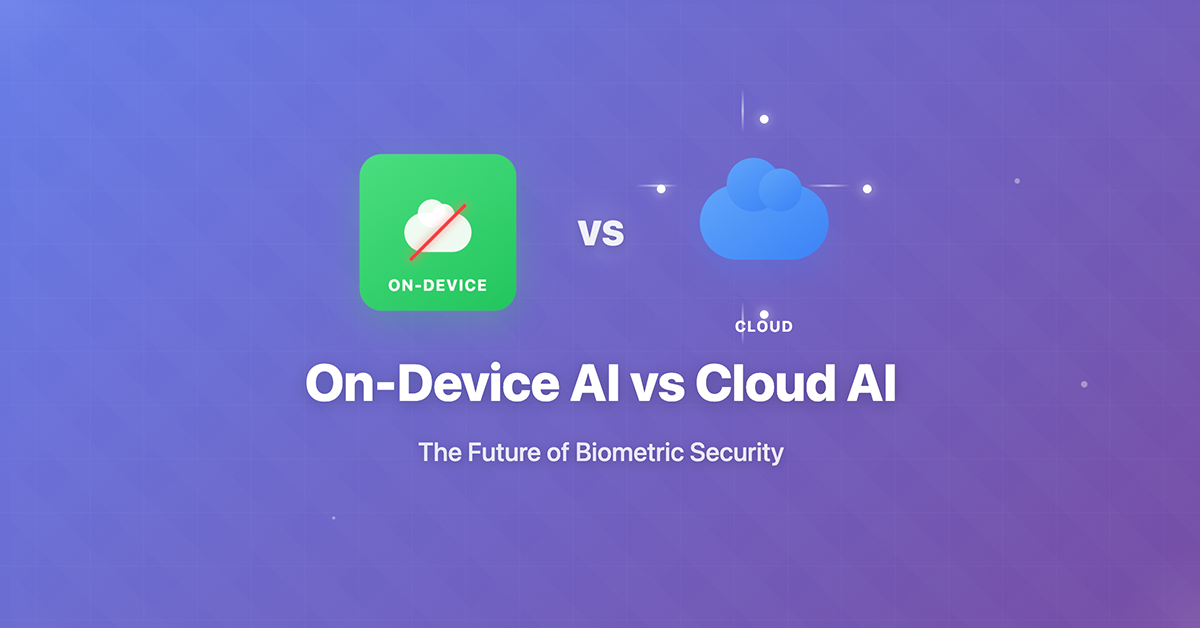
The access control industry stands at a crossroads. Cloud-based biometric systems promised centralized management and infinite scalability. Yet a surprising shift is happening: the global edge AI hardware market is expected to reach $38.87 billion by 2026, with access control driving significant adoption. The reason? Organizations are discovering that keeping biometric processing local isn’t just about privacy—it’s about creating more secure, resilient, and reliable authentication infrastructures.
The Hidden Vulnerabilities of Cloud-Based Access Control
Every time an employee’s biometric data travels to the cloud for verification, it creates a trail of vulnerabilities. The facial scan from your lobby, the fingerprint from your server room, the iris pattern from your high-security zone—all potentially exposed during transmission.
Consider the stakes: A 2023 IBM Security report found that data breaches involving biometric data cost organizations an average of $4.88 million per incident, significantly higher than breaches involving other data types. For access control systems protecting critical infrastructure, intellectual property, or sensitive facilities, the risks multiply exponentially.
Cloud-based access control systems also battle latency at scale. When hundreds of employees arrive during morning rush hour, cloud authentication creates bottlenecks. Network delays compound. Queues form. What should be seamless entry becomes a daily frustration that impacts productivity and employee satisfaction.
But the most critical challenge is availability. Cloud-dependent access control becomes a single point of catastrophic failure. Internet outage? No one enters the building. Server problems? Your security checkpoints freeze. DDoS attack? Your entire physical security infrastructure crumbles. For mission-critical facilities—data centers, hospitals, manufacturing plants—such vulnerabilities are unacceptable.
The On-Device Revolution in Access Control
On-device processing fundamentally reimagines access control architecture. Biometric templates stay within your security perimeter. Processing happens at the edge—in the readers, terminals, and secure tokens that constitute your access control ecosystem.
The performance gains transform user experience. Modern edge AI processors can perform facial recognition in under 100 milliseconds, faster than traditional card swipes. Employees experience truly frictionless entry while organizations maintain military-grade security.
Resilience becomes built-in, not bolted-on. Each access point operates independently. If one fails, others continue functioning. Network outages don’t paralyze your facility. Your security infrastructure becomes antifragile—growing stronger under stress rather than breaking.
Energy efficiency delivers unexpected benefits. Research from MIT shows that edge AI can reduce energy consumption by up to 90% compared to cloud processing. For organizations managing hundreds of access points, this translates to significant operational savings and reduced environmental impact.
The Technical Architecture of Modern Access Control
Today’s on-device biometric systems employ sophisticated architectures that would have seemed impossible just years ago. Secure elements—hardware-isolated processors—handle biometric data in complete isolation from other system components. Even if malware compromises the access control software, biometric templates remain protected.
The innovation lies in distributed template storage. Instead of centralizing biometric databases (creating attractive targets for attackers), templates reside on secure tokens—smart cards or embedded secure elements that users carry or that remain with the local authentication device. When authentication occurs, the biometric capture device creates a temporary template, compares it locally to the stored template, then immediately discards the captured data.
According to NIST testing, modern on-device facial recognition algorithms achieve false acceptance rates below 0.001% while processing entirely offline. These aren’t compromises—they’re achievements that match or exceed cloud-based alternatives.
Hardware acceleration makes this possible. Dedicated neural processing units embedded in modern access control terminals execute complex biometric algorithms with remarkable efficiency. These processors, purpose-built for AI workloads, deliver cloud-level performance at the edge.
Real-World Deployment: Where Each Approach Excels
Cloud-based access control isn’t without merits. Centralized systems excel at enterprise-wide policy management. When you need to instantly revoke access across 50 buildings in 10 countries, cloud platforms deliver. Real-time monitoring, centralized audit logs, and unified dashboards provide security teams with comprehensive visibility.
Cloud systems also simplify visitor management. Temporary credentials, contractor access, and guest privileges flow naturally through centralized platforms. Integration with HR systems, scheduling software, and compliance tools becomes straightforward when everything connects through APIs.
The analytics advantage remains significant. Cloud platforms aggregate access patterns across entire organizations, identifying anomalies that might indicate security threats. Unusual access times, atypical entry sequences, or suspicious movement patterns emerge from big-data analysis.
Yet for core employee authentication—the thousands of daily entries that constitute normal operations—on-device processing increasingly dominates. The reliability, speed, and privacy benefits outweigh centralized management conveniences.
The Compliance and Privacy Imperative
Privacy regulations have transformed from guidelines to legal requirements with severe penalties. The European Union’s GDPR classifies biometric data as special category data requiring explicit consent and enhanced protection. Violations can result in fines up to 4% of global annual revenue.
California’s Consumer Privacy Act specifically identifies biometric information as sensitive personal information, triggering strict handling requirements. Illinois’s BIPA has resulted in multi-million dollar settlements for improper biometric data handling. Similar laws proliferate globally, from Brazil’s LGPD to India’s proposed Data Protection Bill.
On-device processing elegantly navigates this regulatory maze. When biometric data never enters cloud systems, many compliance requirements simply don’t apply. Data residency? Automatically satisfied. Cross-border transfer restrictions? Irrelevant. Right to deletion? Inherently fulfilled when templates exist only on local tokens.
For multinational organizations, this compliance simplification is transformative. Instead of managing different privacy requirements across jurisdictions, on-device architectures provide universal compliance through architectural design.
Performance Metrics for Access Control
Let’s examine metrics that matter for physical security:
Authentication Speed: On-device systems authenticate in 50-200 milliseconds, enabling smooth traffic flow even during peak periods. Cloud systems average 300-800 milliseconds, creating noticeable delays that compound during rush periods.
System Availability: On-device access control achieves 99.99% uptime, limited only by hardware failures. Cloud-dependent systems typically achieve 99.9% availability, with each additional nine requiring exponentially more investment.
Concurrent Capacity: On-device systems scale linearly—each additional access point brings its own processing power. Cloud systems face bottlenecks as concurrent authentication requests increase, requiring expensive infrastructure scaling.
Failure Recovery: On-device systems recover instantly from network failures—they never depended on the network. Cloud systems require careful disaster recovery planning, with recovery times measured in minutes or hours.
The Hybrid Architecture: Strategic Integration
Progressive organizations aren’t choosing between on-device and cloud—they’re architecting intelligent combinations. Core authentication happens on-device for speed and reliability. Management, monitoring, and analytics leverage cloud capabilities for centralized control.
This federated approach preserves privacy while enabling enterprise features. Biometric templates remain on local secure tokens. Only anonymized access events, stripped of biometric data, flow to cloud platforms for analysis and reporting.
Microsoft’s research on federated learning demonstrates how organizations can achieve centralized intelligence without centralizing data. Access patterns, security insights, and optimization opportunities emerge from aggregated metadata, not raw biometric information.
Financial institutions pioneer this hybrid approach. Bank of America reported reducing tailgating incidents by 60% using hybrid systems that combine on-device biometric verification with cloud-based behavioral analytics—without ever transmitting biometric data to central servers.
Industry Transformation: The Shift to Edge Computing
The access control industry’s pivot toward edge computing isn’t subtle—it’s seismic. Major manufacturers are embedding AI processors in their latest readers. Startup innovators focus exclusively on edge-based solutions. Even traditional cloud-first vendors now offer hybrid options.
HID Global’s 2023 State of Security Report found that 78% of organizations plan to implement edge-based biometric systems within three years. The drivers extend beyond privacy: total cost of ownership, system resilience, and user experience all favor edge architectures.
The semiconductor industry responds accordingly. Specialized AI chips for edge computing see massive investment. NVIDIA’s Jetson platform, Google’s Coral devices, and Intel’s Movidius processors all target edge AI applications, with access control representing a primary use case.
The Token Revolution: Biometrics You Control
The next evolution in access control centers on secure biometric tokens—physical or digital containers that store biometric templates under user control. Unlike traditional access cards that merely carry static identifiers, biometric tokens contain living templates that authenticate against real-time biometric captures.
These tokens fundamentally alter the security equation. Lost card? Without your biometric match, it’s useless. Forgotten token? Many systems support backup authentication methods. Worried about privacy? Your biometric data resides only on tokens you physically control.
Smart card technology has evolved to support this architecture. Modern secure elements can store multiple biometric templates, execute matching algorithms, and communicate results—all within a credit-card-sized form factor. The computational power that once required server rooms now fits in your wallet.
Preparing Your Organization for Edge-First Access Control
The transition to on-device biometric processing requires strategic planning but delivers lasting benefits. Organizations must evaluate their current infrastructure, identify upgrade paths, and develop migration strategies that minimize disruption.
Start with pilot deployments. Select high-security areas where on-device processing’s benefits are most apparent. Measure improvements in authentication speed, system reliability, and user satisfaction. Use these metrics to build the business case for broader deployment.
Training matters. Security teams accustomed to centralized cloud dashboards need to understand distributed architectures. IT departments must learn to manage edge devices at scale. But the investment pays dividends in reduced complexity and improved security posture.
SNAPPASS: Pioneering Secure Token-Based Biometric Authentication
At ANDOPEN, we’ve engineered SNAPPASS to address the fundamental challenges of modern access control through our innovative SNAPPIN token technology. Our approach stores biometric templates securely on SNAPPIN tokens—available both as cards and embedded device storage—ensuring your biometric data never enters vulnerable cloud systems.
Our architecture delivers the best of both worlds: the security and privacy of on-device processing with the convenience and manageability enterprises demand. SNAPPIN tokens use advanced cryptographic techniques to protect biometric templates while enabling lightning-fast authentication at any equipped access point. Whether managing a single facility or a global enterprise, SNAPPASS scales elegantly without compromising security or privacy.
By keeping biometric data on user-controlled tokens while providing centralized management capabilities for access policies and audit logs, SNAPPASS eliminates the traditional trade-offs between security, privacy, and operational efficiency. Our platform seamlessly integrates with existing access control infrastructure while preparing organizations for evolving privacy regulations and security challenges.
Ready to transform your organization’s approach to secure access control? Discover how SNAPPASS and SNAPPIN token technology can elevate your security infrastructure.